

The rich man and Lazarus
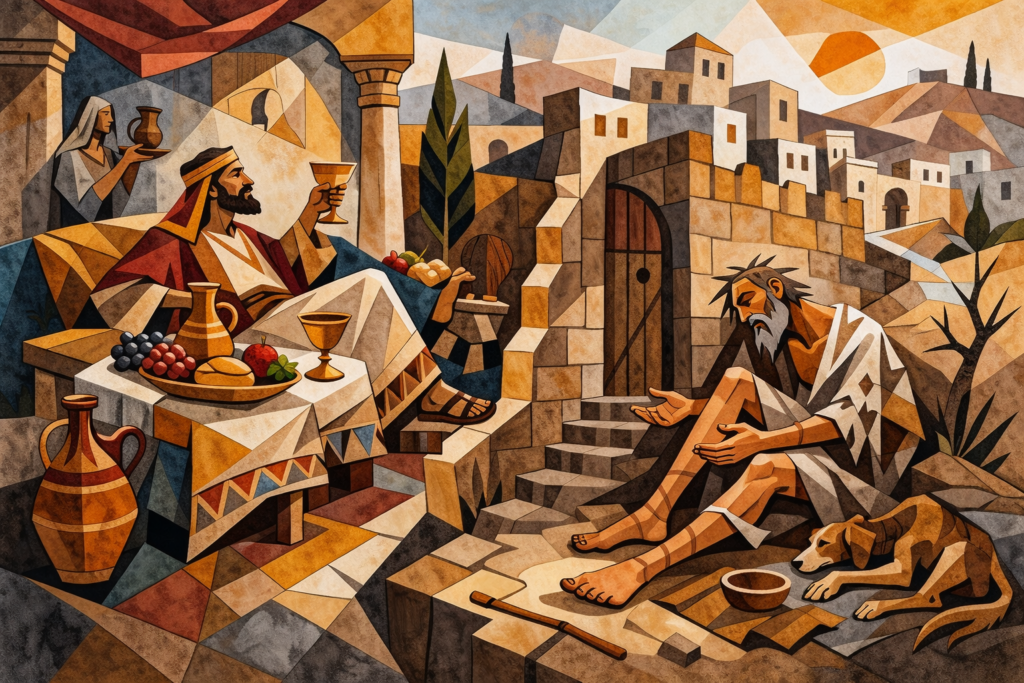
In Luke 16:19–31, Jesus tells a story that exposes reality. The parable of the rich man and Lazarus is not about wealth or poverty, but about whether we hear God who speaks.
Jesus tells the story in a tense moment.
The Pharisees, lovers of money and masters of outward religion, had rejected his teaching and were now standing on the side sneering and mocking. They looked righteous, but their hearts were far from God. They reshaped Scripture to suit their lusts, keeping what elevated them and ignoring what confronted them. Into that setting, Jesus tells a story that removes religious masks.
The contrast is stark. A rich man lives in daily extravagance and self-indulgence, while a poor man, Lazarus, lies at his gate in suffering. One enjoys everything this world offers, the other has nothing. Yet death reverses everything. Lazarus is carried to comfort, the rich man finds himself in torment.
The rich man is not condemned because he was wealthy, nor is Lazarus saved because he was poor. The dividing line is this: God has spoken, and those who disregard him will be condemned. He has revealed himself and his plan to redeem lost sinners. The law and the prophets reveal his Son, the saviour of mankind.
Even in torment, the rich man reveals his misunderstanding. He asks for relief, then for a miracle to warn his brothers. Surely, he thinks, if someone rises from the dead, they will repent.
But Abraham’s response cuts to the heart: “They have Moses and the Prophets; let them hear them.”
God has already spoken.
That is the central issue. The problem is not a lack of evidence, but a refusal to listen. If people will not hear God’s Word, no miracle will convince them. Jesus is making it clear that Scripture is sufficient. It reveals God, exposes sin, and points to salvation.
This parable is both a warning and an invitation. Death fixes our destiny. There are no second chances beyond it. What matters is how we respond to God’s voice now.
And God is still speaking.
He speaks through His Word, ultimately pointing us to His Son, Jesus Christ. His Word is sufficient to save and is sufficient to transform his people. The same message that confronted the Pharisees confronts us: will we listen, or will we shape truth to suit ourselves?
Faith does not come through miracles, but through hearing. The question is not whether God has spoken. The question is whether we are willing to hear Him.
Listen to the full sermon HERE.