

Everyone quits something at some point.
Sometimes it is a hobby or a discipline. Sometimes it is a relationship. But one of the hardest things to keep doing is praying when nothing seems to change.
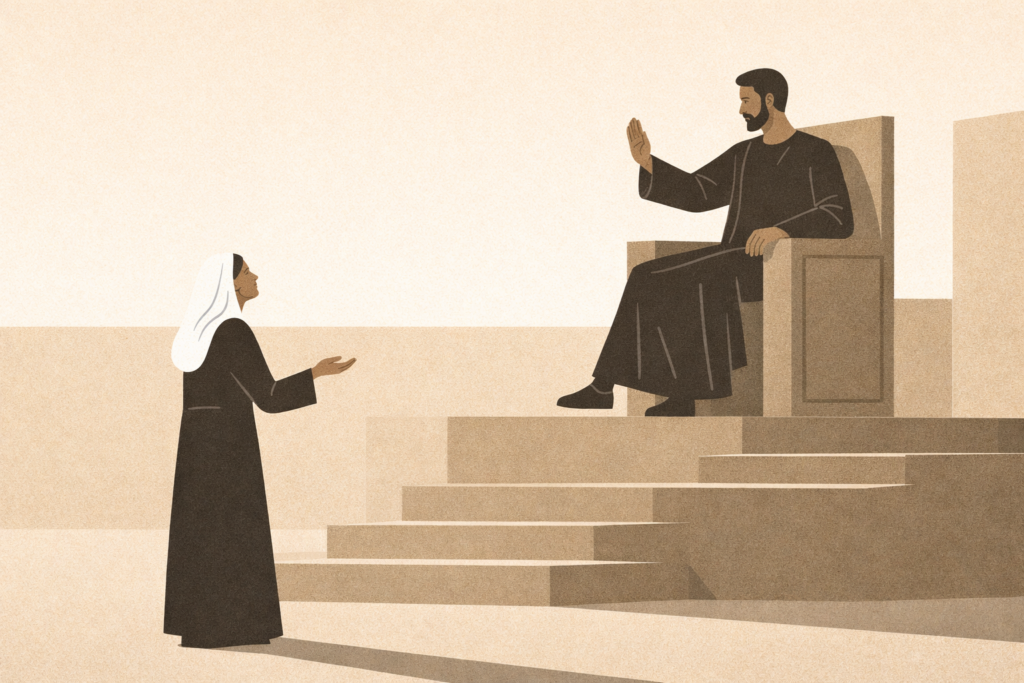
That is the situation Jesus addresses in the parable of the widow and the unjust judge in Luke 18. Luke even tells us the purpose of the story before it begins: Jesus told this parable “to the effect that they ought always to pray and not lose heart.”
Jesus had just explained to his disciples that he would leave them, but that he would return one day to bring justice and set the world right. The problem was the waiting in between. His followers would remain in a world that hated their Shepherd and would hate them too.
History quickly proved him right. Early Christians faced persecution from both Jewish authorities and the Roman Empire. A Roman governor named Pliny the Younger once reported that the Christians he interrogated were guilty of nothing more than meeting before dawn, singing to Christ as God, committing themselves to moral living, and sharing a meal together. Yet many were executed for it.
In that kind of world, believers cry out to God for justice or chnage. They pray the same prayer Christians have prayed for centuries: “Your kingdom come.”
But what happens when the answer seems delayed?
Jesus tells the story of a widow who repeatedly comes to an unjust judge asking for justice against her adversary. The judge neither fears God nor respects people. At first he refuses to act. Eventually, worn down by her persistence, he grants her justice simply to stop her constant appeals.
The point of the parable is not that God must be worn down like the judge. The point is the contrast.
If even an unjust judge will eventually grant justice, how much more will a righteous and loving God act on behalf of his people?
God hears the cries of his choice ones. The cross itself proves that God does not ignore injustice. At Calvary he judged sin, and when Christ returns he will finish that work by bringing perfect justice to the earth.
Yet Jesus ends with a sobering question: “When the Son of Man comes, will he find faith on earth?”
Faith, in this passage, is continuing to pray even when the answer seems slow in coming. It looks like refusing to give up on God when circumstances tempt us to stop asking.
Christians may wait a long time for justice or change. But they do not wait without hope.
The God who hears their prayers is faithful, and when the time is right he will act suddenly and completely. Until that day, Jesus calls his people to keep praying and not lose heart.
Listen to the full sermon HERE.